Atlanta Oral & Maxillofacial Surgery and Dental Implant Center
Why Do We Have Wisdom Teeth?
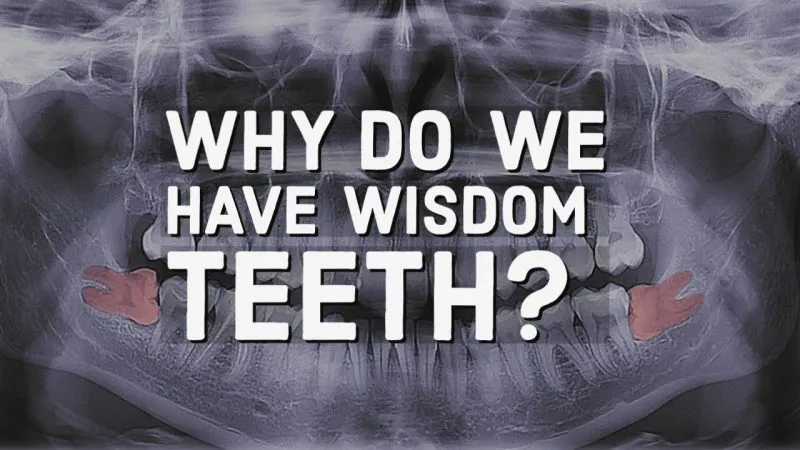
“Do you ever wonder why we have wisdom teeth? It’s kind of interesting question and why they’re called wisdom teeth. And so what wisdom teeth are, they’re your third molars. You have a first molar, second molar, and third molars, and they pretty much start erupting in your late teens and come in if you have room for them in your 20s.
So that actually, it’s an interesting story. They looked at skulls from men in 5,000, 10,000 years ago, like we’re cavemen, and basically, our jawbones are still the same size. But what’s different is our diet. Back then, we didn’t have agriculture, we didn’t have processed foods. So people ate rough raw food that has that dirt in it, and basically, everything was raw and off the ground, or however they did it. But they looked at their skulls and like kids from age seven or eight, they would use their baby teeth, and then through their mid-teens, they had their adult teeth. And these skulls they looked at, most 15, 16-year-olds, their front teeth were broken down, pretty much gone, and they would allow the back teeth to roll forward.
So also back then, if you lived to be 25 and escaped death from animals and other accidents, you’re considered some of the wise people in the tribe. So you’re one of the wise elders. And so people, when they’re 20, 21, these wisdom teeth would come in because there’s room and the teeth would have drifted forward. And at age 20, 21, 22, you had four fresh teeth. So these teeth had room to come in, and they would have fresh teeth to live for the last five, six years of their life. So that’s why they’re called wisdom teeth.
And now, our jaws are still the same size but we don’t lose our front teeth. And so they get stuck back there. So that’s why we have wisdom teeth, plus, I thought that was interesting.”
Why Do Wisdom Teeth Cause Pain?
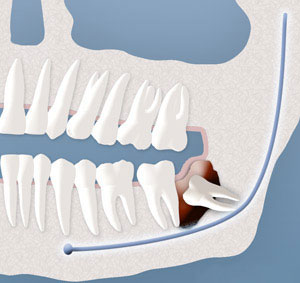
“Okay, let’s talk about wisdom teeth and pain. And one of the common procedures we do as oral surgeons are remove wisdom teeth, and one of the most common reasons we take them out are they cause pain, and the number one reason they cause pain is they get infected. And they get infected because in most people, there’s not room in your jaw for them to come in. If you look at the radiograph where the jaw bone curves around, there’s the bone, and the tooth comes in, and it pushes on the tooth in front of it. But you get these little crevices in the gum where you get food, and plaque, and bacteria that accumulate. And this accumulation of bacteria and plaque is called pericoronitis. That’s a dental term for it, but a lot of people are not aware of these infections. But if you look in the mouth, there’s pus and so forth, and it gives people bad breath. So that’s the main reason we take them out.
And for most people, given enough time in their mid to late teens, they’re gonna get infected, and the treatment for that is basically to remove them. You come in one day. We put you to sleep. Give you some intravenous antibiotics, and take them out, and it clears it up lickity-split. It’s kinda like if you have a sliver in your hand. You remove the sliver, the pain goes away.
Another reason wisdom teeth cause pain is as they’re trying to push into your mouth there’s not room for them, they can cause pressure on the adjacent teeth and around the bone around them. And people, quite often the upper ones, they feel like they have a little headache, or so forth, and that’s another common reason we take them out.
They also can get cavities on them, in adults. People 40, 50 years old, a lot of times, they get decay on the wisdom tooth or the tooth in front of it. So that’s why they also come out in adults. Even the impacted teeth in adults, given enough time, they typically will get infected. As far as treating it, basically, we remove the wisdom teeth. And nowadays, in modern dentistry and medicine, it’s a pretty easy process for you. We put you to sleep. It’s about a 30-minute procedure. You go home, and you’re pretty much up and about the next day, pretty quickly. So it’s an easy solution for a painful situation.”
Why should I have my wisdom teeth removed?
If you do not have enough room in your mouth for your third molars to fully erupt, a number of problems can happen. Impacted wisdom teeth should be removed before their root structure is fully developed. In some patients it is as early as 12 or 13, and in others it may not be until the early twenties. Problems tend to occur with increasing frequency after the age of 30. Some of the possible problems related to not removing your wisdom teeth include:
INFECTION:
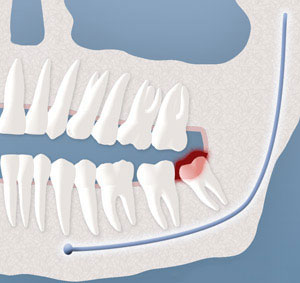
The most frequent clinical problem we see is pericoronitis, (a localized gum infection). Without enough room for total eruption, the gum tissue around the wisdom tooth can become irritated and infected, resulting in recurrent pain, swelling, and problems with chewing and/or swallowing.
CYST FORMATION:
Non-infectious diseases may also arise in association with an impacted wisdom tooth. Cysts are fluid-filled “balloons” inside the jaw bone that develop as a result of impacted teeth and slowly expand destroying adjacent jaw bone and occasionally teeth. They can be very difficult to treat if your wisdom teeth are not removed in your teenage years. Although rare, tumors can be associated with the delayed removal of wisdom teeth.
POSSIBLE CROWDING:
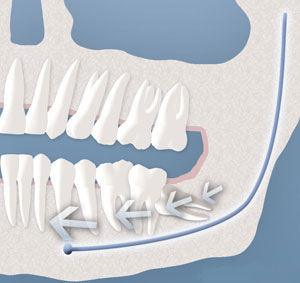
Impacted wisdom teeth may contribute to crowding of your teeth. This is most noticeable with the front teeth, primarily the lower front teeth and is most commonly seen after a patient has had braces. There are a number of factors that cause teeth to crowd after braces or in early adulthood. Retained, impacted wisdom teeth may be a contributing factor. Unless you have an active problem when you see the oral surgeon, the reason for removal is primarily to prevent long-term damage to your teeth, gums and jaw bone.
DAMAGE TO ADJACENT TEETH:
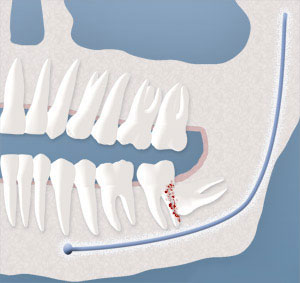
If there is inadequate room to clean around the wisdom tooth, the tooth directly in front, the second molar, can be adversely affected resulting in gum disease, bone loss around the tooth, and/or decay.
How Do You Clean All-on-4 Dental Implants?
Here are some recommendations for cleaning your implant supported bridges.
Once you get in the habit — you should be able to clean your implant supported bridge in 90 – 120 seconds at each cleaning. Doing this twice a day — once when you wake up or after breakfast, and once before you go to bed or after dinner — will keep your teeth and dental implants at optimal health.
- After every meal use “superfloss” under the bridge.
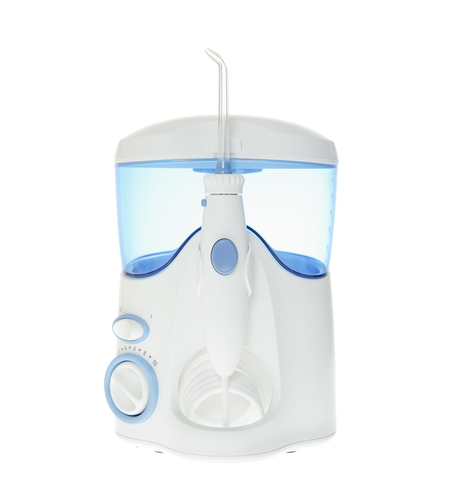
 Use a “Waterpik®” with ¼ non-alcohol anti-bacterial mouth rinse and water.
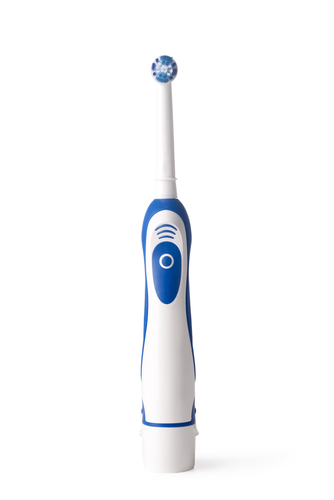
- Use an electric tooth brush such as a Sonicare. These significantly improve cleaning and plaque removal.
- Brush your tongue and cheeks to remove bacteria and odors.
- Attend professional cleaning appointments every 3 months.
Whether you have your final “All on 4®” bridge or your temporary fixed bridge on your dental implants, your daily home care procedures should be very similar.
YOUR GOAL IS THREEFOLD:
- Remove any food that remains.
- Remove bacteria that clings over and under the bridge.
- Prevent those same bacteria from hardening onto the bridge (knows as plaque) which eventually causes mouth odors and implant related gum disease.
Oral-B® Superfloss is special dental floss — it has a special stiffened end that helps get it under your bridge, and has a spongy component that is super to rub off plaque and bacteria.
Use your Superfloss a minimum of one time a day. The ideal protocol is once after breakfast, and once before you go to bed.
IDEAL PROTOCOL — 2-TO-3 TIMES A DAY
- Brush your teeth, gums and cheeks with a regular tooth brush or your Sonicare to remove bulky food.
 Use your Superfloss to get under the bridge’s underside.
- Now use your Waterpik® — filling the tank ¼ mouth rinse and ¾ water under the bridge, etc.
- Consider using a proxy brush or end tuft brush to get any other tough areas, especially where the bridge intersects your gums.
An electric toothbrush such as the Sonicare is a great investment. Their sonic vibrations as well as electric movement is 5 times more effective in cleaning than a manual toothbrush. They can be purchased at drug stores, online at Amazon, and many dentists sell them as well.
When cleaning is complete, rinse twice a day with a non-alcohol mouth rinse like Natural Dentist. Also dip your cleaning aids in Natural Dentist when cleaning your bridge.
Your dental hygienist should clean around your bridge every 3 months as well. Dr. Loetscher has designed your bridge to make it relatively easy to be unscrewed by your dentist at times to clean and polish underneath it. Your dentist can advise you of your need to have the bridge removed at times to thoroughly clean and polish it. This will depend on your own diligence at oral hygiene to some degree.
How long does it take to get a dental implant?
Using the most recent advances in dental implant technology, Dr. Loetscher is able to place single stage implants. These implants do not require a second procedure to uncover them, but do require a minimum of six weeks of healing time before artificial teeth are placed. There are even situations where the implant can be placed at the same time as the tooth extraction – further minimizing your number of surgical procedures.
Dental implant placement is a team effort between an oral and maxillofacial surgeon and a restorative dentist. Dr. Loetscher performs the actual implant surgery, initial tooth extractions, and bone grafting if necessary. The restorative dentist (your dentist) fits and makes the permanent prosthesis. Your dentist will also make any temporary prosthesis needed during the implant process.
“Hello, Dr. Loetscher here. So, one of the questions I get is how long does it take to get dental implants? And really, what people are wondering, “How long does it take to get your tooth on an implant?” And so, it kinda depends on the situation.
Probably several times a week, we have someone walk in the door that broken their front tooth, and we’ll put them to sleep, take the tooth out, put an implant in, and our on-site lab here will scan and mill a tooth, and they’ll leave with a front tooth right in place. It’ll look just like the original one. Although it’s a temporary tooth, that implant has to sit in the bone for four to six months and fully fuse with the bone.
The implants are made out of titanium and the bone will actually chemically bond to it so strong, you can never remove it. So, we put this temporary tooth in, we tell them to be cautious not to chew hard. And then five or six months later, they get the final porcelain crown that goes on that they can chew on. It’ll be one of the strongest teeth in their mouth.
There’s some people that are missing bone in the area, so they come in and we do this quite often as well. We’ll take some bone, maybe from the lower jaw. We’ll do some tissue engineering process while we rebuild the bone. And that sometimes sits for six months. And then six months later, we’ll put their implant in and then make that temporary tooth. And again, you need to wait about four months to get your final tooth. So, you go through that integration stage but unless we’re building the site up with bone, quite often, we can put the tooth on right then.
Another process we do quite often, people have failing teeth and we take out all their teeth, or maybe all their top teeth, and then put in many implants, six implants per jaw bone. And that day we’ll take their teeth out, put the implants in, and we’ll be able to scan a whole bridge of temporary teeth, and they’ll leave with that bridge of teeth in. Screws right in their implants, so they get their teeth right away while they’re asleep. Teeth come out, implants go in, and they get their new set of teeth the same day but the same situation, those implants need to integrate for four to six months. Then you get your final set of teeth that’s made out of more durable material in the final set of porcelain. And so, they’re higher cost than the temporary growing teeth we put on. So, it kinda varies situation to situation but nowadays most people get their teeth pretty quickly on the same day.”
How long does it take to recover from dental implant surgery?
https://www.youtube.com/watch?v=uisCSYBWOyk
Using the most recent advances in dental implant technology, Dr. Loetscher is able to place single stage implants. These implants do not require a second procedure to uncover them, but do require a minimum of six weeks of healing time before artificial teeth are placed. There are even situations where the implant can be placed at the same time as the tooth extraction – further minimizing your number of surgical procedures.
Dental implant placement is a team effort between an oral and maxillofacial surgeon and a restorative dentist. Dr. Loetscher performs the actual implant surgery, initial tooth extractions, and bone grafting if necessary. The restorative dentist (your dentist) fits and makes the permanent prosthesis. Your dentist will also make any temporary prosthesis needed during the implant process.
“Hello, Dr. Loetshcher here. So, I wanna talk to you a little bit about recovering from dental implants and there’s kinda three ways I look at this. One is a single implant, straightforward case. Number two is an implant of some bone grafting. And the third way I look at it is a full set of teeth of implants that we do, converting someone’s teeth to implants.
So, one of the common procedures that we do is put in a single implant. Quite often, someone will break off a front tooth. It would be an emergency situation. They’ll come in, we’ll put them to sleep, we take the tooth out, put an implant in, make a provisional tooth right there and mill it in the lab. They leave with a front tooth. And those patients the next day, it’s almost like nothing happened. In general, most of those patients don’t have any pain. If it’s right in front of your mouth, you might have a little ache right in this area for the day. So, in the back of the mouth, it’s almost like we didn’t even work on them. So, really quick and easy recovery. On antibiotics for five days.
The other thing that we do is a lot of implants in the back of the mouth, do some bone grafting and a sinus lift. We might harvest some bone from the lower jaw. And for those patients, it’s a little bit of a bigger procedure. They’re gonna have some puffiness for three or four days. But even so, the next day a lot of people go to work, they get back to their normal activities but they might be a little sore for a couple of days because it’s a little bit bigger procedure.
The third thing we do quite a bit of, I take someone’s teeth out and put in maybe six implants per dental arch and provide them with a whole new set of teeth. And for those patients, they’re asleep for several hours, getting the teeth taken out and implant put in. It seems like a lot, but believe it or not, it’s not very invasive and those patients, they wake up, we give them the Novacaine that keeps it numb for 10 or 12 hours, and they’ll go home and the next day a lot of people don’t need narcotics. They might, they might not, but they’ll come in and see us the next day. Sometimes we give them the teeth the day we did it, sometimes they come to screw in a whole set of teeth the next day and they’re not even on pain medications unless we did some bone grafting, then they might be on some pain medication.
But, in general, it’s pretty shocking how easy the recovery is from this. And if we did bone grafting, you’re on antibiotics for about 10 days, otherwise, it’s about five days. We give people narcotics and a lot of patients don’t use narcotics. Even so on the procedures with people with no one, we take bone from their hip and rebuild their jaw. Those patients, I did a study on that one time and like 70% of them didn’t use narcotics after two days so dental implant surgery, in general, is very easily recovered from. You have to eat kinda soft foods and non-abrasive foods for a couple of days but it’s a quick recovery.”
How long does it take to recover from orthognathic surgery?
https://www.youtube.com/watch?v=qPQ99DH-JkQ
Who needs orthognathic surgery? People who can benefit from orthognathic surgery include those with an improper bite, or jaws that are positioned incorrectly. Jaw growth is a gradual process and in some instances, the upper and lower jaws may grow at different rates. The result can be a host of problems that may affect chewing function, speech, or long-term oral health and appearance. Injury to the jaw and birth defects can also affect jaw alignment. Orthodontics alone can correct bite problems when only the teeth are involved. Orthognathic surgery may be required for the jaws when repositioning is necessary.
“Hello. Dr. Loetscher here. So I’m going to talk a little bit about your recovery from orthognathic surgery, what we also call jaw surgery, or repositioning the jaw bones to line up the bite. We do a lot of it for sleep apnea as well. We do these procedures in our outpatient surgery facility here in our office. And recovery here for the first hour or two, then you go to your home. And one of our nurses will accompany you to your home for the first several hours to get things started for you. And that’s worked out very good.
And so, as far as the surgery goes, there is four things that are a big deal. “What am I going to go through?” So, number one is a lot of swelling. Number two, there is almost no pain. Number three, on a soft diet for six weeks. And number four, you need about a week, week and a half to recuperate.
So let’s talk about the swelling. So number one is, you get a lot of swelling in your face. It’s very significant, to the point that everybody that sees you for the first two weeks will know you’ve had some swelling. There is actually a benefit to that, because the swelling is actually part of moving your bones around. And so the nerves that provide their feeling to the area will be a little bit swollen. So you get some numb lips on the top and on the bottom if we do both jaws. And that actually keeps it from hurting. And believe it or not, most people after a day or two use very little pain medication.
But the other great thing about this is, nerves that get numb, they do not move your face. So the smile now will look normal. They just provide a feeling. Then in a few weeks, in the upper lip you start getting your feeling back, a little longer the lower lip. So by the time the feeling comes back, most of your pain’s gone. So that’s a pretty awesome thing. It’s like, you can do all this resetting and there is nominal pain from it.
So the third thing about this is, you’re on a soft diet for six weeks. So, we move your bones around. We don’t break your jaw. It was done a long time ago, people say. It’s a very precise cutting. We reset the jaw bones. And we use these titanium screws, little bone plates, mini plates we put in there that secure the bones in the new position. So when you wake up, you can open and close your mouth. So that’s the first week. But a rule of thumb is you can chew soft foods, anything as soft as macaroni and cheese or softer, which covers things like pasta and meatloaf, cooked seafoods, tilapia. So it’s pretty much a non-chew diet, or it’s a soft chew diet, for six weeks. It seems like that’s not a big deal, but about week four people are crying for pizza and tacos and things. So that’s a little bit of a thing is a soft diet for six weeks.
And the fourth thing is, it takes about a week or two to get your energy back. So for students we’d say take a week off school. You really need a week and a day. So we do a lot of these during the winter break, spring break, summer break. And adults, you know, we do it all year round and adults that are in school.
And so, the way it works is, your first week, we do a lot of these on Tuesdays, so if we did it on Tuesday, Wednesday and Thursday you’d feel pretty good because you’re getting a steroid called Decadron that cuts down on the swelling, but it gets you on a runner’s high, a boost of energy. So Wednesday and Thursday you’d feel pretty good. Friday and Saturday, when you’re drugging it up, you get a low. You feel all depressed. So that weekend, like day five and six you’re a little bit down energy-wise. And then day seven and eight recover.
And so if you did it on Tuesday and you have to go back to work, I’d say go back to work the following Wednesday, eight days later, and maybe work part-time. Because it’s really a matter of getting your energy back. And so, everything from here down works great the first day. It’s just your rhythm with the up and down and energy and a really stiff swollen jaw, and getting used to some numb lips. But after a week, people that are used to the numbness and not feeling bad they can eat. So it’s a pretty quick recovery. But the first week, you know, it’s a week of a hassle of a stiff, swollen jaw.
The other thing about this surgery is you think, “Okay, resetting jaw bones. What about infections, the bones not healing, bones not fusing?” Well, the facial area has a great blood supply. So in the thousands of these I’ve done, I’ve never seen anybody get a severe infection. They don’t have problems with the bones not healing, the bones not fusing. So it’s a very smooth and uncomplicated procedure for the most part.”
How long does it take to recover from wisdom teeth surgery?
Dr. Loetscher often gets asked about the recovery from third molar (wisdom teeth) surgery. In general, it is a pretty quick recovery. Most of our patients experience a little bit of pain and swelling that usually goes away in the next day or so. Dr. Loetscher does a lot of these surgeries on Fridays and most of our patients are ready to go back to school/work on Monday. One the advantages of coming to Dr. Loetscher, he has additional training in anesthesia, and can offer full general anesthesia as done in a hospital setting, rather than just offering deep sedation. This provides a safe airway, for complete patient comfort. Little to none of our patients have complications with dry sockets etc. because Dr. Loetscher takes the extra time to put in sutures which closes the surgery site to prevent food and other bacteria from getting in the site.
“Hello, Dr. Loetscher here. So, I want to talk a little bit about recovery from third molar surgery, you know, of your wisdom teeth, which we do quite a bit of. And a lot of it’s on children, you know, high school aged kids and college students. And so, we do these in the office. We put you to sleep for it, and you stay here for about 30 minutes afterwards, and you walk out the door and go home, and you’re a little groggy that day. Quite often, you’ll go home and take a nap.
A couple things that a lot of people think a lot about are the swelling and the discomfort, so we do a lot of these on Fridays. In most cases, you’re going back to school on Monday. As far as the swelling goes, you’re going to get some puffy cheeks the next day. Like on Saturday and Sunday, it’s about the same, and by Monday, it improves quite a bit, that you can go back to class. We do give you an ice pack to wear, which helps a lot with the swelling.
As far as the pain control, we actually are pretty good with that nowadays. We actually give you some Novocaine that keeps it numb for about 8 or 10 hours. That helps a lot. That gets you through the day, and by the time that wears off, most of the pain is gone. You’ll have a couple kinds of pain medication. We use Motrin, about 600 milligrams of Ibuprofen. We also give patients a prescription for a narcotic. And most people use the Motrin and maybe a little bit of narcotic to it the next day or two if they need to. But for most patients, they’ll look back at this and say, “Oh, those weren’t painful.” They’ll just remember puffy cheeks for a couple of days. So, the next day, people, they do some exercise. You go to movies with your friends, you know, swimming in the pool if it’s the summertime, the next day. You’re just going to have some puffy cheeks.
As far as your eating goes, the day we do it, where you’re numb, you need to eat softer foods, but the next day, the Novocaine’s worn off and you can have sandwiches, pizza, and you can eat most foods. You just need to avoid popcorn kernels or bacon bits on salads for about a week, and maybe you’ll want a straw for about a day or two.
So, in general, it’s a pretty quick recovery for most kids, and they just remember that they’re going to have puffy cheeks for a couple of days, and they go see their friends the next day, if they’re up for it. And everybody is a little bit different. Sometimes you need a couple days more than that, but it’s a pretty quick recovery.”
How Long Do Dental Implants Last?
Dental Implants Should Last a Lifetime.
One of the most common questions Dr. Loetscher gets asked from patients is: “How long do dental Implants last?” We have the answers for you! Dr. Loetscher says if dental implants are properly placed and taken care of, they can last lifetime. Dr. Loetscher has placed thousands of implants at his practice over the last 25 years.
“One of the questions I often get asked are how long do dental implants last? Or really how long do the teeth last on implants last? And the short answer is for most people they are going to last a lifetime. When we treatment plan, we set up people for implants and our goal is to get the conditions just right so they are going to last your lifetime. The conditions basically consists of healthy bone & healthy gum tissue to put your implants in. So if that’s done properly- sometimes we graft the site ahead of time so you can get a nice tooth that should be great for your whole life. Implants were actually developed in Sweden in the 1960s starting in about 1965 and thousands of patients had whole sets of implant teeth put in and they followed those patients for 25-30 years and 25 years down those patients (about 94%) still have their original sets of teeth in place. Dentistry is by far the most successful treatment modalities we have ever had. When we do a full set of teeth, a couple of the principles we have: you need about 6 implants per dental lodge to support a full set of teeth. If you do four in and you lose one you can lose the bridge and it also doesn’t give you a full set of teeth-so if you have 6 implants properly positioned they are going to last your lifetime. There’s a couple of conditions that can affect them; for example a single implant-if you put them in and a patient has gum disease elsewhere in their mouth, the periodontal pockets can actually have some severe bacteria around those natural teeth that can get to your implant and a couple years later you can get a pocket on the implants. You need to stay with your dentist with your implants and get your teeth cleaned every 3-6 months and if you do all of that it can be a nice lifelong solution.”
- Dr. Loetscher – most experienced dental implant surgeon in the area
- State of the art safe, clean modern facility
- Atlanta’s most technologically advanced lab – on site
- Certified Smile Designers
- Name Brand Implants
- Networked with Atlanta’s most experienced restorative dentists, prosthodontist, and other dental specialists
To schedule a consult with Dr. Loetscher please call our office at 770-664-5550 or fill out a contact form. We look forward to seeing you soon!
What Type of Anesthesia Does Dr. Loetscher perform?
One of the benefits of coming to Atlanta Oral & Maxillofacial Surgery & Dental Implant Center is that Dr. Loetscher is a board certified anesthesiologist. He is one of the only oral & maxillofacial surgeons in the state that is trained and set-up to safely administer true general anesthesia. He performs four different types of anesthesia; local anesthesia, local anesthesia with nitrous oxide, IV sedation and general anesthesia. He determines which type of anesthesia is best based on the patient and the surgical procedure he is performing. Our goal is to ensure that our patients have the most comfortable surgery experience. Our team is highly skilled and we can assure you that you will be in good hands.
Watch the video below to hear from Dr. Loetscher himself about the different types of anesthesia the our office has to offer:

The 4 types of anesthesia we offer are as follows:
- Local Anesthesia: Such as lidocaine. It simply numbs up the area while you are awake.
When it’s used: Simple procedures such as tooth removal and soft tissue procedures such as bumps on your lips and gums.
- Local Anesthesia with Nitrous Oxide: We add nitrous oxide through a nasal mask that helps relax you while providing light sedation and comfort. You can drive home after receiving this type of anesthesia.
When it’s used: This is also used in simple procedures, but for those where you are somewhat anxious and would like some relaxation.
- IV Sedation: For this, an intravenous line is used to administer sedative drugs that relax you, make you sit more still, and typically provide a high level of amnesia, so you have minimal recollection of the procedure and feel like you’ve been put to sleep. You may move around during the procedure, but may not recall it. You are not put too deeply asleep because you need to maintain your airway for safety.
When it’s used: IV sedation is very useful for more straightforward, less technical procedures such as simple extractions, straightforward dental implant procedures, and some biopsies. We often use this on elders as well.
- General Anesthesia. For this an IV line is also initiated. You are put completely to sleep with a combination of IV drugs and an inhalation agent. A breathing tube is placed via your nose into your windpipe after you are asleep. The inhalation drugs are administered through this tube. This is an ultra-safe technique because your airway is intact. Most general anesthetics at the hospital are administered this way as well.
With general anesthesia you are asleep so you have no recall. You are sitting still so the surgeon can be very technically proficient. Also, the drugs used to keep you asleep are ultra-short acting so you wake up quicker and much more alert. We often use no sedatives or narcotics for this.
When it’s used: General Anesthesia is ideal for procedures such as third molar removal, most dental implant procedures, and procedures on children. For nervous children and young adults (and occasionally very anxious adults) we often put them asleep with the inhalation agents (gases) and once asleep start the IV line. This way the patient does not “see a needle”, which for many is their greatest concern.
For types 3 and 4 (IV sedation) the patient needs to arrive with an empty stomach (4 hours for IV sedation & 8 hours for general anesthesia) and you will need someone to drive you home.
Anesthesiologist: We utilize an additional board certified MD anesthesiologist for all orthognathic surgery procedures, longer & more complex reconstructive and implant procedures, and many elders.
Feel free to call our office at 770-664-5550 if you have any questions regarding anesthesia.
The Best Patient Testimonial!
“I wish the whole world knew how amazing Dr. Loetscher is!” – Maryleigh
There is no greater compliment to our team than knowing our patients are more than satisfied with their outcomes. We were so excited to receive the video below from Maryleigh, who received full upper and lower bridges at Atlanta Oral & Maxillofacial Surgery. Thank you to Dr. Hal Arnold for sending such a special patient our way, and thank you to Maryleigh for trusting us with your smile!
“He along with Dr. Arnold gave me my life back! I LOVE LOVE LOVE Dr. Loetscher and his team.”